
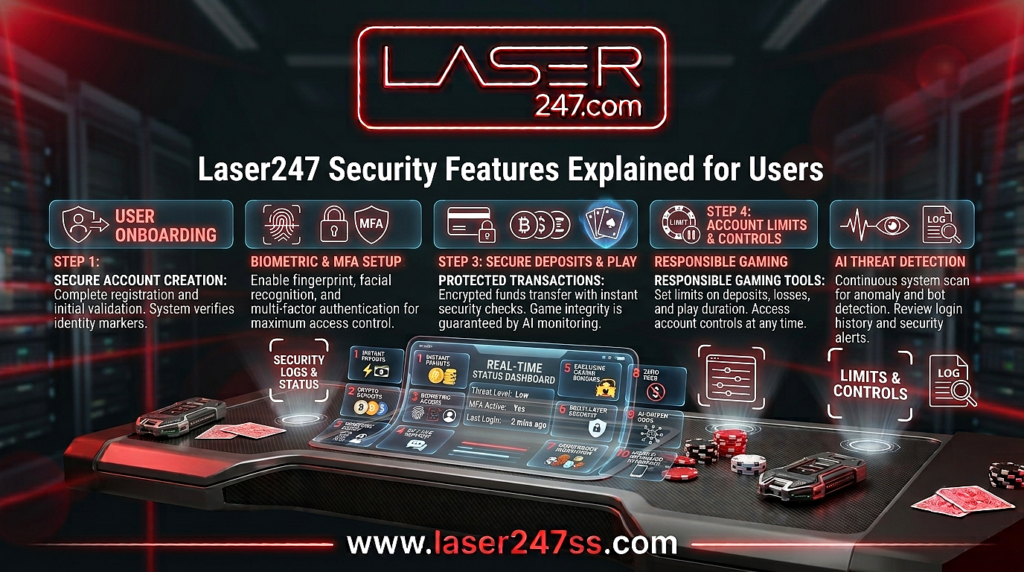
How Secure Is Your Laser247 Account in 2026?
Online platforms today handle a wide range of sensitive information, including personal details, login credentials, payment information, and account activity records. Because of this, security has become one of the most important factors users consider before creating an account or using any digital service.
Whether you are accessing a sports platform, managing transactions, or simply maintaining an online account, understanding available security features helps you make safer decisions. A platform with multiple layers of protection can reduce the chances of unauthorized access, data exposure, and suspicious account activity.
When users search “Is Laser247 safe?”, they usually want to understand how their account information, login details, and transactions are protected. Like many online platforms, Laser247 highlights several security measures designed to improve account protection, including encrypted connections, verification systems, monitoring tools, and security controls.
This Laser247 Security Guide explains the different security features users should understand, how they work, and what steps users can take to improve their own online safety.
Why Security Matters on Online Platforms
Cybersecurity threats have increased significantly as more services move online. Hackers and cybercriminals often target accounts because they can gain access to personal information, financial details, or valuable user data.
A weakly protected account may be vulnerable to:
- Unauthorized login attempts
- Password theft
- Phishing attacks
- Fake websites and login pages
- Payment-related fraud
- Data privacy issues
This is why account protection is not only the responsibility of a platform but also requires users to follow safe online practices.
Strong online security usually depends on multiple layers working together. A secure platform may use encryption technology, login verification, suspicious activity monitoring, and user authentication methods to create a safer environment.
For users, choosing platforms that prioritize user data safety can provide additional confidence when managing personal accounts.
Some important security factors to consider include:
1. Protection of Login Information
Your username, password, and account credentials are the first line of defense. If login information is exposed, attackers may attempt to access your account.
Security features such as encrypted connections and additional verification steps help reduce the risk of unauthorized access.
2. Safe Handling of Personal Information
Online platforms collect different types of information during registration and usage. Proper data protection practices help ensure that sensitive details are stored and handled responsibly.
3. Secure Transactions
For platforms involving payments or financial activity, transaction security becomes even more important. Encryption, verification checks, and monitoring systems can help protect users during sensitive actions.
4. Prevention of Suspicious Activity
Modern security systems often monitor account behavior to identify unusual patterns, such as unfamiliar login locations or repeated failed login attempts.
These measures can help detect potential threats before they become serious problems.
SSL Encryption – The Foundation of Laser247 Security
One of the most common security technologies used by online platforms is SSL encryption.
SSL (Secure Sockets Layer) encryption protects information exchanged between a user’s device and a website server. In simple terms, it converts sensitive information into an encrypted format so that unauthorized people cannot easily read or intercept it.
When you visit a website with SSL protection, your connection is secured through encryption protocols. This is especially important when users enter:
- Login credentials
- Personal details
- Payment-related information
- Verification codes
A secure connection helps protect data while it travels between your browser and the platform.
How SSL Encryption Works
The process happens through several steps:
- Secure connection request
When a user opens a protected website, the browser requests a secure connection. - Encryption verification
The website provides security certificates that confirm the encrypted connection. - Data encryption begins
Information exchanged between the user and server is converted into encrypted data. - Secure communication continues
The information remains protected during transmission.
This technology is widely used across banking websites, ecommerce platforms, payment services, and other online systems where security is important.
Why SSL Encryption Matters for Laser247 Users
For any platform where users create accounts or access personal dashboards, secure communication is an important security layer.
According to Laser247 security information, the platform uses SSL encryption technology to help protect account access and user transactions.
The benefits of SSL encryption include:
Protection Against Data Interception
Without encryption, information transferred online could potentially be exposed during transmission. SSL helps create a protected channel between the user and the platform.
Safer Login Experience
When users enter their account credentials, encrypted communication helps protect login details from being intercepted.
Improved Transaction Security
For users performing sensitive actions, encrypted connections provide an additional layer of protection during data exchange.
Understanding 256-Bit SSL Encryption
Some platforms mention the use of 256-bit SSL encryption, which refers to the strength of the encryption key used to protect transmitted data.
A higher encryption level generally means there are more possible combinations needed to decode the encrypted information, making unauthorized access significantly more difficult.
Many industries use strong encryption standards because protecting user information is essential for maintaining trust.
However, encryption is only one part of complete account security. Even with strong SSL protection, users should still follow security best practices such as:
- Creating strong passwords
- Avoiding password sharing
- Enabling additional verification methods
- Checking account activity regularly
Security works best when both the platform and the user take responsibility.
Two-Factor Authentication (2FA) for Extra Protection
Passwords are no longer enough to protect online accounts. Even users who create strong passwords can face risks such as phishing attacks, password leaks, or unauthorized login attempts.
This is where Two-Factor Authentication (2FA) becomes an important security layer.
Two-factor authentication adds an additional verification step after entering your password. Instead of relying only on something you know (your password), it requires another form of verification, such as a one-time password (OTP) sent to your registered mobile number or email.
For users searching “Laser247 2FA” or looking for better Laser247 Account Security, enabling additional verification methods can provide stronger protection against unauthorized access.
How Two-Factor Authentication Works
The 2FA process is designed to confirm that the person trying to access an account is the actual account owner.
A typical authentication process includes:
Step 1: Enter Your Login Details
The user enters their registered username, ID, or email along with their password.
Step 2: Verification Request
After successful password verification, the platform requests an additional security check.
Step 3: Enter OTP or Verification Code
The user receives a temporary verification code through an approved method, such as SMS or an authentication application.
Step 4: Access Granted
Only after successful verification does the user gain access to the account.
This additional step makes it much harder for attackers to enter an account, even if they somehow obtain the password.
Why 2FA Improves Laser247 Account Security
A password-only login system has a single point of failure. If someone gets access to your password, they may attempt to access your account.
With two-factor authentication, attackers need both:
- Your password
- Your secondary verification method
This creates an additional barrier.
For example, if someone discovers your password through a phishing attempt, they may still be unable to complete the login process without the OTP or verification approval.
According to Laser247 security information, OTP-based verification and additional authentication options are designed to improve user account protection.
Benefits of Two-Factor Authentication
1. Reduces Unauthorized Access Risk
2FA helps prevent unauthorized users from accessing accounts using stolen passwords.
2. Protects Against Password Theft
Many cyberattacks focus on collecting usernames and passwords. Additional verification reduces the impact of stolen credentials.
3. Adds Security During Sensitive Activities
Extra verification can be especially useful during account changes, login attempts, or important transactions.
4. Improves User Confidence
Knowing that an account has multiple security layers gives users greater confidence while using online platforms.
Secure Login System Explained
A secure login system is one of the most important parts of any online platform. The login process is the main gateway to user accounts, which means protecting access is essential.
Laser247 Login Security focuses on multiple verification and monitoring measures designed to help protect account access.
A secure login environment typically includes:
- Encrypted communication
- Password protection
- Verification checks
- Session security
- Suspicious activity monitoring
Together, these features help create a safer login experience.
Account Verification During Login
User verification helps confirm that the person accessing an account is authorized.
Security checks may include:
- OTP verification
- Device recognition
- Login confirmation
- Activity monitoring
- Additional verification for unusual activity
For example, if an account login occurs from an unfamiliar device or unusual location, additional checks may be required before access is approved.
This type of protection helps prevent unauthorized account usage.
Session Security and Login Protection
After a successful login, platforms need to protect the user’s active session.
A session refers to the period when a user remains logged into their account.
Common session security practices include:
Automatic Logout
Some platforms use automatic logout features after a period of inactivity. This helps protect accounts if users forget to log out from shared devices.
Session Monitoring
Security systems may monitor active sessions to identify unusual behavior.
Device Management
Trusted device controls allow users to recognize or remove devices connected to their account.
These measures help improve overall secure account access.
Login Alerts and Suspicious Activity Monitoring
One important part of modern cybersecurity is identifying unusual account behavior.
Suspicious activity may include:
- Multiple failed login attempts
- Access from unknown devices
- Unusual account behavior
- Repeated verification failures
Security monitoring systems can help identify these patterns and trigger additional verification steps.
Laser247 security resources mention login monitoring and additional verification checks for unusual access attempts.
For users, receiving alerts about unexpected activity provides an opportunity to take quick action, such as changing passwords or reviewing account settings.
Advanced Fraud Detection and Monitoring
Cybersecurity is not only about preventing unauthorized login. Platforms also need systems that can identify suspicious activity after an account is accessed.
This is where fraud detection systems play an important role.
Fraud monitoring uses technology to analyze account activity and identify patterns that may indicate risk.
Examples of suspicious behavior include:
- Unusual transaction patterns
- Multiple account access attempts
- Abnormal usage behavior
- Changes that do not match normal user activity
How Fraud Detection Systems Work
Modern fraud detection systems may use a combination of:
Behavioral Analysis
The system studies normal account behavior and identifies activities that appear unusual.
For example, a sudden change in login behavior or activity pattern may trigger additional security checks.
Automated Monitoring
Automated systems continuously review account activity to identify potential risks.
Risk-Based Verification
If an activity appears suspicious, the platform may request additional verification before allowing certain actions.
AI-Based Security Monitoring
Many modern online platforms use advanced technologies, including artificial intelligence (AI), to improve security monitoring.
AI-powered security systems can analyze large amounts of activity data and identify unusual patterns faster than manual monitoring.
Potential benefits include:
- Faster threat detection
- Improved fraud prevention
- Automated security responses
- Better account monitoring
Laser247 security materials describe monitoring systems designed to identify suspicious activities and improve account safety.
However, users should remember that technology works best when combined with responsible security habits.
What Users Can Do to Improve Fraud Protection
Even with advanced security systems, users play an important role in protecting their own accounts.
Follow these safety practices:
Use a Strong Password
Create a unique password that is difficult to guess. Avoid using common words, birthdays, or repeated passwords from other websites.
Never Share OTP Codes
Verification codes are private security information. Legitimate support teams should not ask users to share OTPs.
Check Account Activity Regularly
Review login activity and account changes to identify anything unusual.
Avoid Suspicious Links
Phishing websites often imitate real platforms to steal login information. Always verify website addresses before entering credentials.
Payment Security Measures on Laser247
For platforms that involve financial transactions, payment security is one of the most important aspects users consider. Users want confidence that their payment information, transaction details, and account balances are protected from unauthorized access.
A secure payment environment requires multiple security layers working together, including encrypted communication, transaction verification, monitoring systems, and responsible data handling practices.
When users search “Is Laser247 safe?”, payment protection is often one of the key concerns. Understanding how payment security systems work can help users make better decisions about maintaining their online safety.
According to Laser247 security resources, the platform highlights security practices such as encrypted payment routing, verification processes, and transaction monitoring measures designed to improve payment protection.
How Secure Payment Systems Protect Users
Online payment systems are designed to prevent unauthorized transactions and protect sensitive financial information.
A secure payment process generally involves several steps:
1. Encrypted Payment Communication
When payment-related information is transferred, encryption helps protect the data from being intercepted during transmission.
Encryption converts sensitive information into a protected format that can only be understood by authorized systems.
This helps protect:
- Transaction details
- Payment information
- User account information
- Verification data
2. Transaction Verification
Verification steps help confirm that a transaction request is genuine.
These may include:
- OTP confirmation
- Account verification
- Security checks
- Transaction monitoring
Additional verification can reduce the risk of unauthorized transactions, especially when unusual activity is detected.
3. Payment Activity Monitoring
Modern platforms often use monitoring systems to review transaction patterns.
Security systems may look for:
- Unusual transaction frequency
- Unexpected account behavior
- Suspicious payment attempts
- Abnormal activity patterns
If a transaction appears risky, additional checks may be required before completion.
Secure Transactions and User Responsibility
While platforms implement security systems, users also have an important role in maintaining safe transactions.
Following good payment security habits can reduce risks:
Avoid Saving Payment Details on Untrusted Devices
If you use a shared computer or public device, avoid saving sensitive information.
Verify Payment Requests
Always confirm that payment requests come from official sources before completing any transaction.
Keep Account Credentials Private
Never share:
- Passwords
- OTP codes
- Verification details
with anyone.
Use Secure Internet Connections
Avoid performing sensitive account activities through unsecured public Wi-Fi networks.
A combination of platform security and user awareness creates stronger overall protection.
Data Privacy and Information Protection
In today’s digital environment, data privacy has become a major concern for online users.
Every online platform that collects user information needs proper systems to store, process, and protect that data responsibly.
Users generally expect platforms to protect:
- Personal information
- Login credentials
- Account activity details
- Transaction records
- Verification information
Strong privacy practices help build trust between platforms and users.
How Laser247 Data Protection Works
Laser247 Data Protection focuses on security practices designed to protect user information and reduce unauthorized access risks.
According to Laser247 privacy information, security measures may include:
- Data encryption
- Access controls
- Security reviews
- Privacy management procedures
These measures are commonly used by online platforms to protect sensitive information.
Encryption of Sensitive Information
Encryption is one of the most important tools used for protecting digital information.
When sensitive data is encrypted:
- Unauthorized users cannot easily read it
- Information remains protected during storage or transmission
- Access is limited to authorized systems
Encryption technology is widely used across industries, including banking, ecommerce, healthcare, and online services.
Access Control and Data Security
Another important part of information protection is controlling who can access sensitive data.
Access control systems help ensure that only authorized individuals or systems can view certain information.
Common security practices include:
- Limited access permissions
- Authentication requirements
- Security monitoring
- Regular system reviews
These controls help reduce the chances of unauthorized data exposure.
Privacy Policies and User Trust
A clear privacy policy helps users understand how their information is collected, stored, and used.
Before using any online platform, users should review privacy information and understand:
- What information is collected
- Why information is needed
- How data is protected
- What security options are available
Transparency plays an important role in building user trust.
Mobile App Security Features
With more users accessing platforms through smartphones, mobile security has become increasingly important.
Mobile devices contain a significant amount of personal information, making account protection essential.
A secure mobile experience may include features such as:
- Biometric authentication
- PIN protection
- Login alerts
- Device management
- Automatic logout
- Remote account access control
According to Laser247 app security information, mobile security features may include biometric authentication, login notifications, PIN protection, and remote logout options.
Biometric Login for Faster and Safer Access
Biometric authentication allows users to verify their identity using unique physical characteristics, such as:
- Fingerprints
- Face recognition
Instead of entering passwords every time, biometric login can provide a convenient additional security option.
Benefits include:
Improved Convenience
Users can access accounts faster without repeatedly typing passwords.
Additional Protection
Biometric verification adds another authentication layer beyond traditional passwords.
Reduced Password Dependency
Users may rely less on easily guessed passwords when additional login methods are available.
Auto Logout and Session Protection
Mobile security also involves protecting accounts when devices are unattended.
Automatic logout features help reduce risks if:
- A phone is lost
- A device is shared
- A user forgets to close an account session
Session protection helps ensure that account access does not remain open unnecessarily.
Trusted Device Management
Device management allows users to control which devices can access their accounts.
This security feature can help users:
- Review connected devices
- Remove unknown devices
- Monitor account access
- Improve account control
Regularly checking connected devices is a useful habit for maintaining Laser247 User Safety.
Remote Logout Protection
If a user loses access to a device or notices suspicious activity, remote logout features can help end active sessions.
This provides an additional layer of control by allowing users to disconnect their account from devices they no longer trust.
User Verification and Account Recovery
Account security is not only about preventing unauthorized access; it is also about helping genuine users regain control of their accounts when problems occur.
A reliable user verification system helps confirm that the person requesting access is the actual account owner. This becomes especially important when users forget passwords, lose access to devices, or notice unusual account activity.
For platforms that manage user accounts and sensitive information, verification processes create an additional security layer by ensuring that account changes and recovery requests are properly validated.
Why User Verification Matters
User verification helps prevent unauthorized individuals from taking control of accounts.
Without proper verification, attackers may attempt to:
- Reset account passwords
- Change account details
- Access private information
- Perform unauthorized actions
A strong verification process helps confirm account ownership before allowing sensitive changes.
Common verification methods include:
- Registered mobile number confirmation
- Email verification
- OTP-based authentication
- Identity confirmation steps
- Security questions or account checks
Laser247 Account Verification Process
When users create or access an online account, verification helps establish that the account belongs to the correct person.
According to Laser247 account information resources, registration and verification processes are designed to help confirm user ownership and improve account security.
A typical account verification process may include:
Step 1: Providing Account Information
Users provide required details during registration or account access.
Step 2: Verification Confirmation
The platform may request confirmation through a registered contact method.
Step 3: Account Activation
Once verification is completed, the account becomes ready for use.
This process helps reduce fake registrations and improves overall platform security.
Account Recovery and Security Protection
Even careful users may sometimes lose access to their accounts. They may forget passwords, change phone numbers, or experience device-related issues.
A secure account recovery system helps legitimate users regain access while preventing unauthorized recovery attempts.
Important recovery features include:
Password Reset Verification
A secure password reset process usually requires identity confirmation before allowing changes.
Registered Contact Verification
Recovery requests may be linked to verified email addresses or mobile numbers.
Security Review
In some cases, unusual recovery requests may require additional verification.
These steps help protect users from account takeover attempts.
Best Practices Every Laser247 User Should Follow
Security systems provide important protection, but users also play a major role in maintaining account safety.
Following good cybersecurity habits can significantly improve Laser247 User Safety.
Here are some important security practices every user should follow:
1. Create a Strong and Unique Password
A strong password is one of the first defenses against unauthorized access.
A good password should:
- Include a combination of letters, numbers, and symbols
- Avoid common words or predictable patterns
- Be different from passwords used on other websites
Using the same password across multiple platforms increases risk because one compromised account can affect others.
2. Enable Two-Factor Authentication
If additional verification options are available, users should consider enabling them.
Laser247 2FA adds another security layer by requiring additional confirmation during login.
Even if someone obtains your password, they may still be unable to access your account without the second verification step.
3. Never Share Passwords or OTP Codes
Passwords and OTPs are private security information.
Users should never share:
- Login passwords
- Verification codes
- Security details
with anyone.
Legitimate platforms generally do not require users to provide confidential authentication codes.
4. Avoid Suspicious Links and Fake Websites
Phishing attacks often use fake websites that look similar to genuine platforms.
Before entering login details:
- Check the website address carefully
- Avoid clicking unknown links
- Do not enter information on suspicious pages
This simple habit can prevent many account security issues.
5. Avoid Public Wi-Fi for Sensitive Activities
Public Wi-Fi networks may not always provide strong security.
Avoid performing sensitive activities, such as account management or transactions, on unsecured networks.
If you must use public internet, ensure your connection and device security settings are updated.
6. Monitor Account Activity Regularly
Regular account monitoring helps users identify suspicious behavior quickly.
Check for:
- Unknown login attempts
- Unexpected account changes
- Unusual transaction activity
- Unknown devices
Early detection allows users to take action before a security issue becomes larger.
Laser247 Security vs Typical Online Platforms
Security features can vary significantly between online platforms. Some services provide only basic password protection, while others use multiple security layers.
A platform’s overall security depends on how different protection methods work together.
| Security Feature | Laser247 Security Approach | Typical Online Platforms |
| SSL Encryption | Used to protect data transmission | Commonly available |
| Two-Factor Authentication | Additional verification options | Depends on platform |
| Fraud Detection | Activity monitoring systems | May vary |
| Login Alerts | Security notifications and checks | Not always available |
| Biometric Mobile Access | Mobile security options | Limited on some platforms |
| Device Management | Account access control features | Often limited |
Why Multiple Security Layers Matter
No single security feature can completely protect an online account.
For example:
- SSL encryption protects data transmission.
- 2FA protects account access.
- Fraud monitoring helps identify suspicious behavior.
- User verification protects account recovery.
- User habits reduce security risks.
Together, these layers create a stronger security environment.
A platform with multiple security controls generally provides better protection compared with systems that rely only on passwords.
Frequently Asked Questions About Laser247 Security Features
Laser247 highlights several security measures designed to improve account protection, including encrypted connections, verification systems, and monitoring features.
According to Laser247 security information, SSL encryption is used to help protect communication between users and the platform.
Laser247 privacy information highlights security practices such as encryption, access controls, and data protection procedures designed to help safeguard user information.
Two-factor authentication adds an additional verification step beyond a password.
It may involve OTP verification or another authentication method to confirm the user’s identity.
Laser247 security resources mention transaction protection measures such as encrypted payment communication and verification processes.
Users should also follow safe payment practices and avoid sharing confidential account details.
Mobile security options may include biometric authentication features such as fingerprint or face verification, depending on device compatibility and available platform features.
If you notice unusual account behavior:
Change your password immediately.
Review recent account activity.
Remove unknown devices if possible.
Contact official support channels.
Avoid sharing security information with anyone.
To improve your Laser247 Account Security:
Use a strong password
Enable available verification features
Avoid suspicious links
Protect OTP codes
Keep your device updated
Monitor account activity regularly
Final Thoughts: Understanding Laser247 Security Features
Online security is built through multiple protection layers working together. Features such as SSL encryption, two-factor authentication, login verification, fraud monitoring, payment protection, and privacy controls can help create a safer digital experience.
The key takeaway is that security is a shared responsibility. Platforms can provide advanced security systems, but users also need to follow responsible online practices.
For better Laser247 User Safety, users should:
- Maintain strong passwords
- Use additional authentication methods
- Protect personal information
- Stay alert against suspicious activity
Understanding security features helps users make informed decisions and use online platforms more responsibly.
A strong security approach combines technology, awareness, and good user habits — creating better protection in an increasingly digital world.
1 thought on “Laser247 Security Features Explained for Users”